
he first thing that stands out about a German jersey is not the crest but the restraint. White body。black trim, a thin line of red or gold—the formula sounds simple until you compare it with the current home shirt. Adidas has produced Germany’s national team kits since 1954, and the best German jersey designs tend to look like they were drawn by someone who trusted the material more than the graphics. The 1990 World Cup shirt, with its geometric chest pattern, still sells in replica form for a reason. It reads as a football shirt first and a fashion object second, which is rarer than it should be. A German jersey from that era also had a collar that sat flat, not the stiff stand-up kind that makes modern replicas feel like costumes. The collar detail matters more than the chest pattern, in my experience.
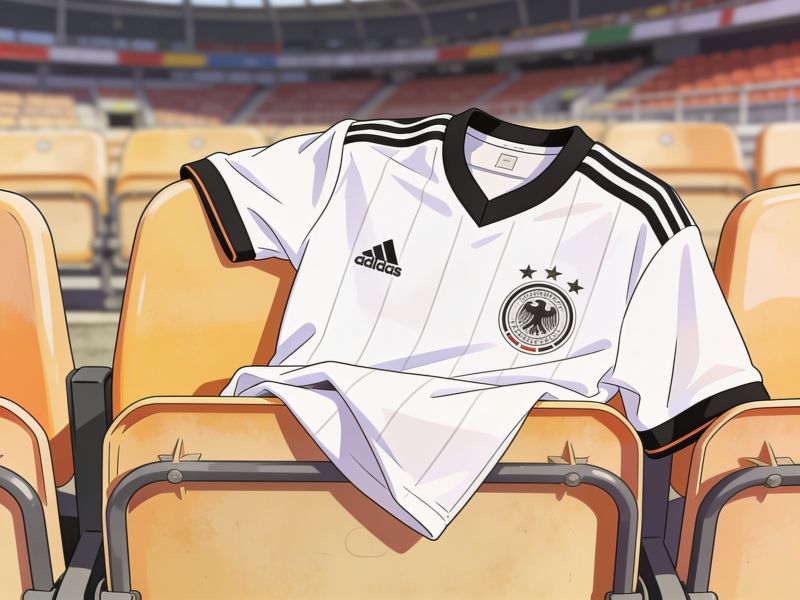
Fit is where the modern German jersey gets complicated. Adidas cuts its national team shirts closer than most Premier League replicas, and the player-issue version is tighter still. A size medium in the 2024 home kit fits more like a small in a standard cotton tee. I watched a buyer in a Berlin store try three sizes before settling on a large, then complain that the sleeves still hugged his arms. That is not a flaw。exactly. Performance fabrics need contact to wick sweat, but fans who plan to wear a German jersey to a pub, a train, or a Tuesday meeting should size up. The replica version uses a softer polyester blend;the authentic has bonded seams and a lighter hand-feel. Both carry the DFB crest, but only one feels built for ninety minutes. The other feels built for the walk home. A German jersey bought online without checking the size chart is a gamble, and the return shipping usually costs more than the difference between replica and authentic.Fan culture gives the shirt a second life. Walk through Cologne on a match day and you will see the German jersey styled in ways Adidas never advertised: over hoodies, under denim jackets。tucked into work trousers. The 2006 World Cup turned public viewing into a national habit, and the shirt became part of the uniform. Prices have followed. A current authentic adult German jersey runs around €150 in official stores, while a replica sits near €90. That gap feeds the counterfeit market. At a flea market near Frankfurt, I found a “1990 retro” German jersey with a crest printed slightly off-center and a collar that felt like cardboard. The seller wanted €35. Authentic vintage shirts from that era, with the correct Adidas trefoil and made-in-West-Germany labels, sell for ten times that. The difference is not just price. A fake German jersey rarely survives a hot wash, and the crest peels before the season ends. That is not a small thing for a shirt that costs as much as a decent pair of boots.Collectors judge a German jersey by details that rarely appear in product photos: the position of the DFB logo, the shade of black on the collar, the wash label’s country of origin, and whether the sleeve stripes are woven or printed. The 2014 World Cup shirt—the one with the subtle red-and-black chevron—has become a reference point because its replicas are unusually close to the player issue. The 2024 away kit, in pink and purple。split opinions before it even reached the pitch. It also sold briskly, which says something about the modern German jersey market: controversy moves product faster than tradition. I still prefer the white home shirts, but I understand the appeal of a kit that looks like a deliberate break. A German jersey should carry a point of view, even if that point of view annoys half the fan base. That is why the pink away shirt works better as a German jersey than the safe white template released alongside it.Buying a German jersey well comes down to three checks. Look at the crest first—official DFB crests are cleanly embroidered or heat-pressed with sharp edges, not fuzzy. Turn the shirt inside out and inspect the stitching at the side seams;
cheap replicas pucker. Then check the code on the wash label against Adidas’s authentication page. Care matters too. Wash a German jersey cold。inside out, and skip the dryer unless you want the print to crack by August. A shirt that fits, carries the right labels, and survives a season of wear is worth more than a drawer full of bargains. That is the practical case for buying once and wearing it hard. The German jersey is not a collectible to keep sealed in plastic—it is a piece of kit, and kit is meant to be used. A German jersey with a cracked print and a loose collar still looks better on a match day than a mint shirt that never leaves the wardrobe.